How to Make a Video Go Viral Like the Best Ad Campaigns


Somewhere, a brand is currently publishing a video that nobody will ever watch. It happens thousands of times a day. 91% of businesses use video as a marketing tool, according to Wyzowl's 2026 State of Video Marketing report, which means your video isn't competing with a few rivals. It's competing with everything. And most of it sinks without a trace.
A rare few travel further than any media budget could carry them. You can't guarantee yours will be one of them. But you can shift the odds, because the best viral ads aren't lucky accidents. They follow patterns, and those patterns can be copied.
I run creative at Don't Panic, and we've spent years making work built to travel. This guide breaks down what the best campaigns get right, then turns each lesson into a step you can lift for your next video.

Key takeaways:
- Sharing is the engine, not budget. A video goes viral when a sufficient number of people feel compelled to share it with their own networks, so a shareable idea is more effective than media spending every time.
- Lead with one idea, not your product. The most effective viral ads, such as Red Bull Stratos and Surreal, prioritize a single compelling idea while keeping the brand in the background.
- The first three seconds decide everything. Start with the payoff instead of the setup, as most viewers lose interest before a slow introduction reaches the exciting part.
- Emotion travels further than information. Choose one real feeling, joy, awe, laughter, or sadness, and cut anything that dilutes it, the way "Dumb Ways to Die" did.
- Cut for the platform and for sound-off. Build vertical, captioned versions for TikTok and Reels and longer cuts for YouTube, since the same footage rarely works everywhere without changes.
What actually makes a video go viral?
A video goes viral when enough people feel compelled to quickly share it with their networks. That happens when one strong idea triggers a real emotion, lands in the first few seconds, and fits the platform it lives on. Shares and the algorithm feed each other: the more people pass it on, the harder the platform pushes it.
Here's the short version before the how-to:
- Sharing is the engine. People share to feel something or to say something about themselves.
- One clear idea beats ten features. If you can't explain it in a sentence, it won't spread.
- The first three seconds decide whether anyone sees the rest.
- Emotion travels furthest. Joy, awe, laughter, and anger all move faster than information.
- Format is not an afterthought. A video built for the platform beats a video dumped onto it.
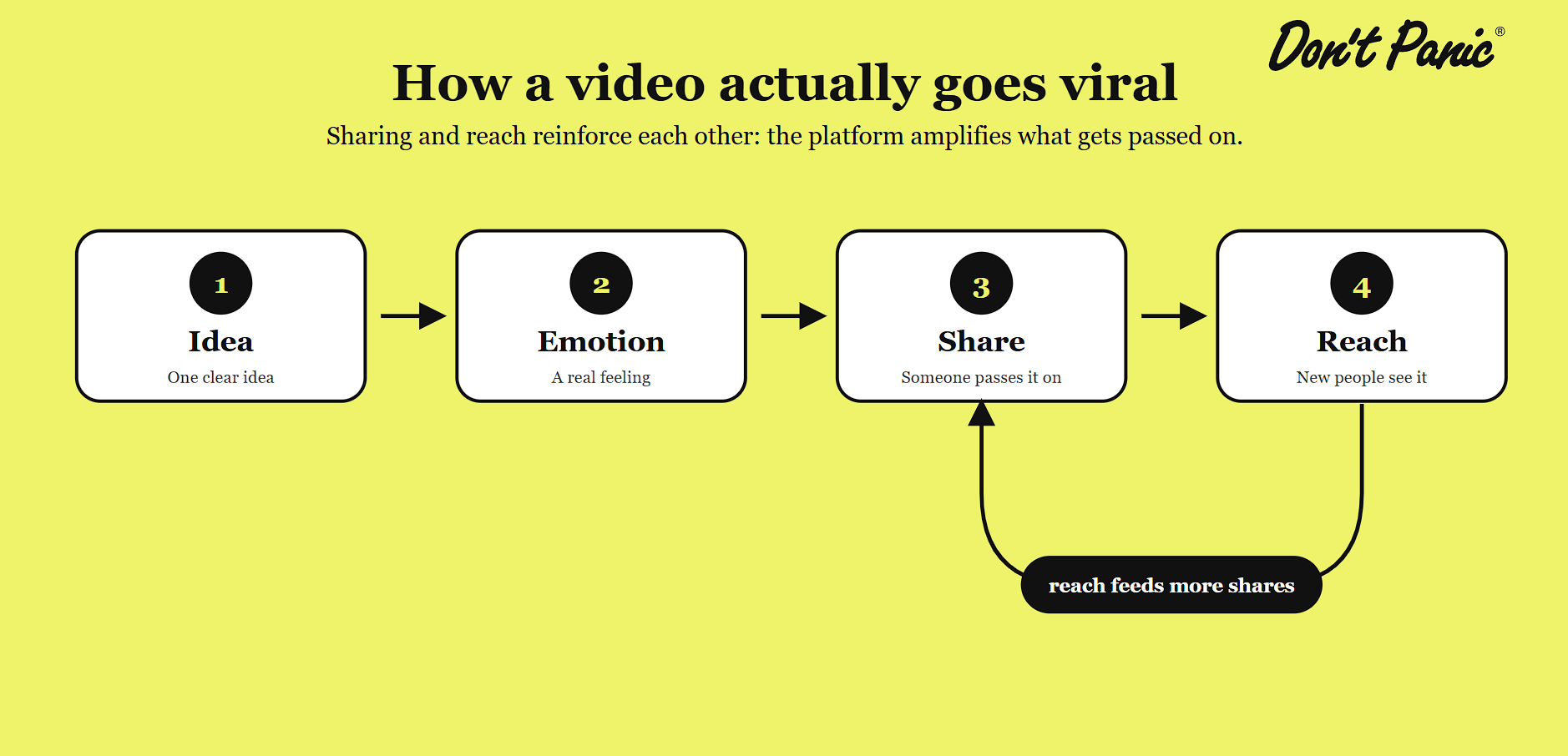
How to make a video go viral: Step by step
Each step pairs a campaign that earned its reach with the move you can lift from it. Use them in order, or pick the ones your next video needs most.
1. Start with one idea, not your product
Lead with a compelling idea that resonates while keeping your product in the background. Red Bull barely shows a can in its most famous film. When Felix Baumgartner jumped from the edge of space in 2012, over 8 million people watched the live stream at once, a YouTube record at the time.
The idea was the spectacle, not the drink. Red Bull handed you something extraordinary to witness, then let the brand sit quietly behind it.
Start with the idea, not the sell. Ask what you want people to feel or talk about, then build the concept around that single thought.
Pressure-test it with one question: would a viewer describe the video to a friend without mentioning your logo? If you're stuck for a starting point, VEED's AI video idea generator turns a topic into concepts and scripts you can react against.
Resist the urge to cram in three messages. One idea, told well, will always travel further than a list of features.
2. Win the first three seconds
Open with the payoff, not the setup. People decide whether to keep watching almost instantly, so the strongest videos front-load the most captivating moment they have.
Surreal, the challenger cereal brand, built a following on posts that hit you with an absurd line before you could scroll past. No logo parade, no slow build, just the joke up top. The hook is the whole game.
Cut the first three seconds of your video, and make those cuts significant. Drop the throat-clearing intro and open mid-action, mid-question, or mid-surprise.
A good test is to show the result first and explain it second. VEED's video editor lets you trim the opening and test two or three different first frames to see which one holds attention.
Watch your own analytics for average view duration. If people drop in the first few seconds, the hook is the problem, not the rest of the video.
Here's a short video about how you can effectively write viral hooks:
3. Make people feel something worth passing on
Give viewers an emotion they want to spread, because word of mouth still is, and always will be, one of the best forms of advertising. Information gets understood. Emotion gets shared. The feeling can be joy, awe, laughter, or genuine sadness, as long as it's real.
"Dumb Ways to Die," the rail-safety film from Metro Trains in Melbourne, is the perfect example. A morbid subject turned into a cheerful, impossibly catchy cartoon, and people watched it, sang along, and sent it to everyone they knew.
Over a decade later, they're still listening to it and sharing it. The safety message rode in on the back of the emotion.
Decide on the single feeling you want before you shoot anything. Find the human truth underneath your idea, the tension or surprise that makes someone react, and build toward it.
Then cut everything that dilutes it. A video that tries to make people feel five things usually makes them feel nothing.
4. Edit the video to suit the platform and ensure it works without sound
Build the video for where it will live, and assume the audio is muted. A vertical clip with captions belongs on TikTok and Reels, while a wider, longer cut suits YouTube. The same footage rarely works everywhere without changes.
Captions are not optional. A huge share of social video is watched on mute, so on-screen text is how most people will follow your story. Adding them with VEED's auto subtitle generator takes minutes and widens your reach to anyone scrolling in silence.
Shoot once, then cut many times. Reframe to vertical for feeds, keep a longer edit for YouTube, and lead each version with its own strongest moment.
VEED's AI clip generator pulls short, vertical highlights out of longer footage, so every platform gets a video made for it rather than a leftover.
5. Give people a reason to share it
Sharing should say something about the person who shares. We pass on things that signal our taste, our identity, or our in-jokes. The share is a small act of self-expression, not a favor to your brand.
Spotify Wrapped nails this every December. Your listening data becomes a personal, brag-worthy card, and millions post it without being asked. In 2025 the campaign reached around 200 million engaged users in roughly 24 hours.
Build the reason to share into the video itself. Before you publish, ask who will send the video to whom, and why.
It should be amusing enough to send to one specific friend, personal enough to feel like theirs, or useful enough that sharing it looks generous. If there's no social reason to repost it, people simply won't.
6. Ride a real cultural moment
Tie your video to something people already care about right now, but only when it genuinely fits. Specsavers has a history of responding to public blunders with its "Should've" line, quickly posting a humorous response while the incident is still fresh in people's minds.
Speed is the multiplier. A reaction posted the same day travels. The same idea a week later is invisible.
Watch for moments your brand has a real right to join, then move fast with a light format you can turn around in an afternoon. Chasing every trend looks desperate and dilutes your voice, so pick the few that fit and skip the rest.
When a moment does fit, keep the execution simple. A sharp caption over one clean clip travels faster than a polished film you finish three days too late.
7. Make the next step obvious
Tell people exactly what to do once you have their attention. The best campaigns turn a passive view into an action: sharing, joining in, or trying something for themselves.
Apple's "Shot on iPhone" did this by making the audience the creators. The brief was simple: shoot something beautiful on your phone, tag it, and you might end up on a billboard. The invitation was the campaign.
![Two large "Shot on iPhone" billboards wrap around a London corner building, each crediting its photographer by name ("by Maria M." and "by Miles G.") above busy shopfronts and a traffic-light junction. [Via adsoftheworld.com]](https://cdn.prod.website-files.com/6a69fe04f0cc589a236108ac/6a6a150713ba7fd1fc8955ce_6a55d7711877e81ce9c1dc30_f18ac8c0.jpeg)
End on one clear ask, not five. Invite a duet, pose a question for the comments, or point to one place to go next.
Make that step as easy as possible to take, because any additional effort will reduce your shares. A single, obvious call to action beats a cluttered one every time.
Why most videos don't go viral
Most videos fail for reasons that have nothing to do with luck. These are the patterns I see trip up brands again and again:
- Leading with the product. The video sells before it earns attention.
- A slow start. The first three seconds are setup, so the viewer is gone before the good bit arrives. Front-loading the payoff fixes most of these on its own.
- No single emotion. The video is competent and completely forgettable, because it never decides how it wants you to feel.
- The cut is inappropriate for the platform. A landscape TV ad gets posted vertically with no captions, then dies on mute.
- Chasing every trend. The brand jumps on a meme it has no right to, and the whole thing feels forced.
- The brand treats a single hit as the ultimate goal. A viral moment is a beginning, not an ending, yet most brands never follow it up while the attention is still there.
Make your next video impossible to scroll past
While you can't directly order a hit, you can certainly increase your chances of success. Start from one idea worth caring about, win the first three seconds, choose a single feeling, cut it for the platform, and give people a reason to pass it on.
Do that consistently, and the wins arrive more often than you'd expect. The brands mentioned above didn't achieve success by chance. They built a habit of making things people want to pass on, then kept showing up to do it again.
Choose one idea you believe in, start with the most compelling aspect, and invest all your energy in the first three seconds. If you want a partner who thinks this way, building campaigns made to be shared is precisely the kind of work we do on the branded content team at Don't Panic.
FAQ
There's no fixed number, because viral is about speed and spread rather than a single threshold. A video is viral when shares climb far faster than your usual reach and the audience carries it well beyond your followers. For a small brand, tens of thousands of organic views in a few days can count. It takes millions for a global brand.
Short videos often perform better, but the ideal length can vary. In Wyzowl's 2026 data, 71% of people believe videos between 30 seconds and 2 minutes are most effective. Lead with your strongest moment, keep only what earns its place, and let the idea set the length rather than a stopwatch.
The best time is when your specific audience is active, which your platform analytics will show you. As a starting point, evenings and weekends tend to suit consumer audiences, while weekday lunchtimes suit B2B. Test a few slots over a couple of weeks, then post consistently rather than chasing one perfect moment.
On TikTok, hook hard in the first second, keep it vertical, and lean into a sound, trend, or format the platform is already rewarding. Native, lo-fi videos often outperform polished ads here. Respond to your best comments with new videos to maintain engagement and provide the algorithm with fresh signals.
Yes, plenty of viral videos start with no media spend at all. Organic reach rewards a strong idea, a sharp hook, and a real reason to share far more than it rewards budget. Free editing tools handle the craft, so your limiting factor is the idea, not the money behind it.
No. Viral reach comes from shares and from the algorithm pushing your video to people who don't follow you, not from your existing audience. A brand-new account can outperform an established one when the idea and the hook are stronger, so a following helps you start faster but doesn't decide the outcome.